
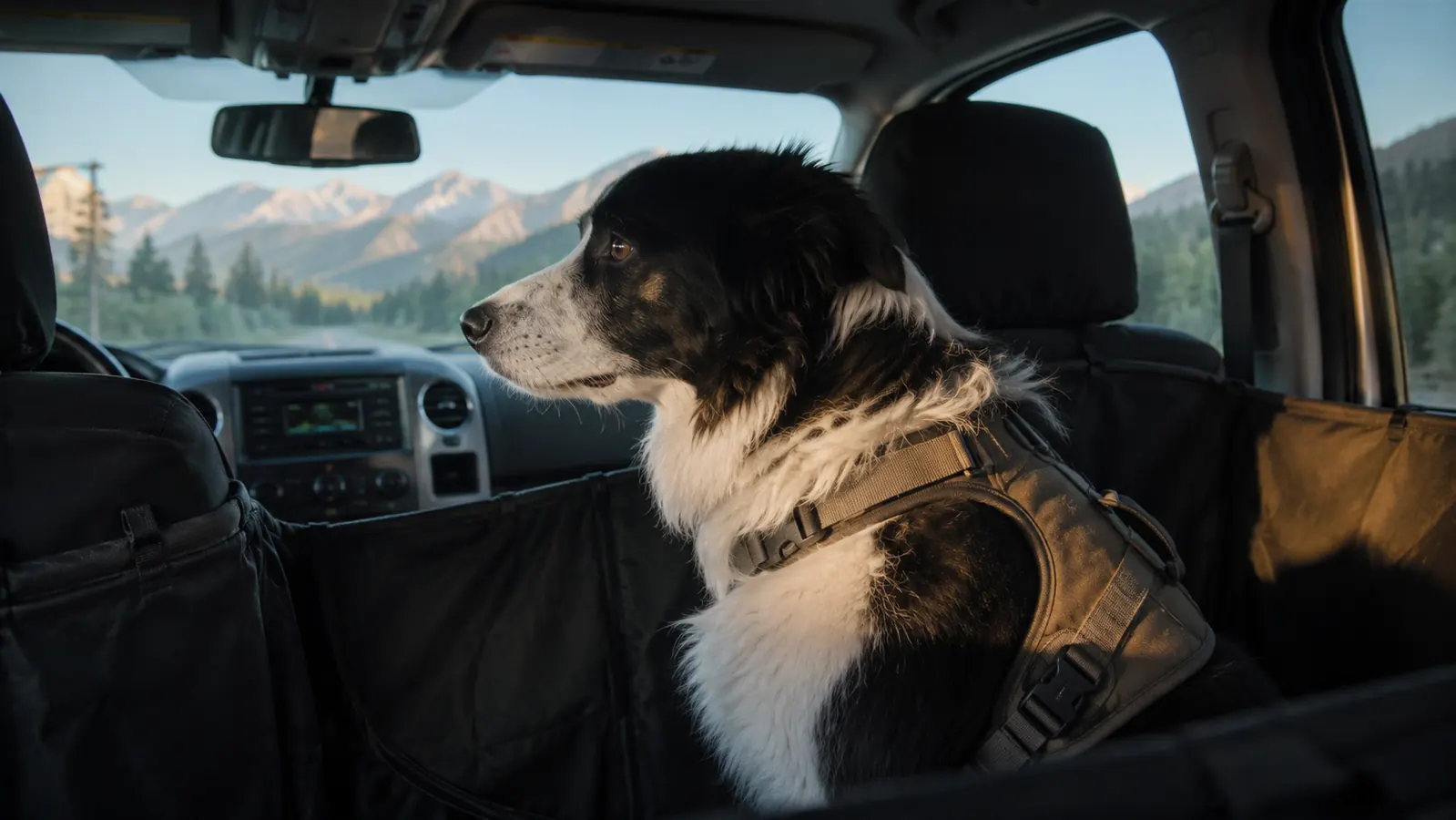
The first time I hit the binders hard on I-80, I heard the seat belt clip pop before I heard anything else. Boone, all 74 pounds of him, slid off the back seat of my 2019 Ram 1500 and landed in a heap on the floorboards. He wasn't hurt. He was scared. And I was angry at myself, because I'd done the thing everyone does: I bought the cheapest clip-on tether at the truck stop and told myself it was good enough.
After that stop, I decided I wasn't going to strap my dog into anything I didn't understand. I spent weeks reading crash test reports, watching harness videos, and annoying people who knew more than me. What I kept coming back to was the Kurgo Tru-Fit Enhanced Strength harness. A year later it's still in the truck, and Boone and I have put roughly 18,000 miles on it, most of it on the grind between Omaha and Salt Lake. Here is what that year actually taught me.
The Quick Verdict
The Kurgo Tru-Fit is the best crash-rated harness I've found for daily driving with a big dog, provided you size up and take the time to fit it properly. It's not perfect. After 18,000 miles, it's the one piece of dog gear I trust completely.
Amazon Check Today's Price →The harness that has lived in my truck for a year
After 18,000 miles of daily driving with Boone in the back seat of a 2019 Ram 1500, the Kurgo Tru-Fit is the harness I trust enough to use every single day. Before you buy another clip-on tether, see what it costs today.
Amazon Check Today's Price on Amazon →How I've Used It
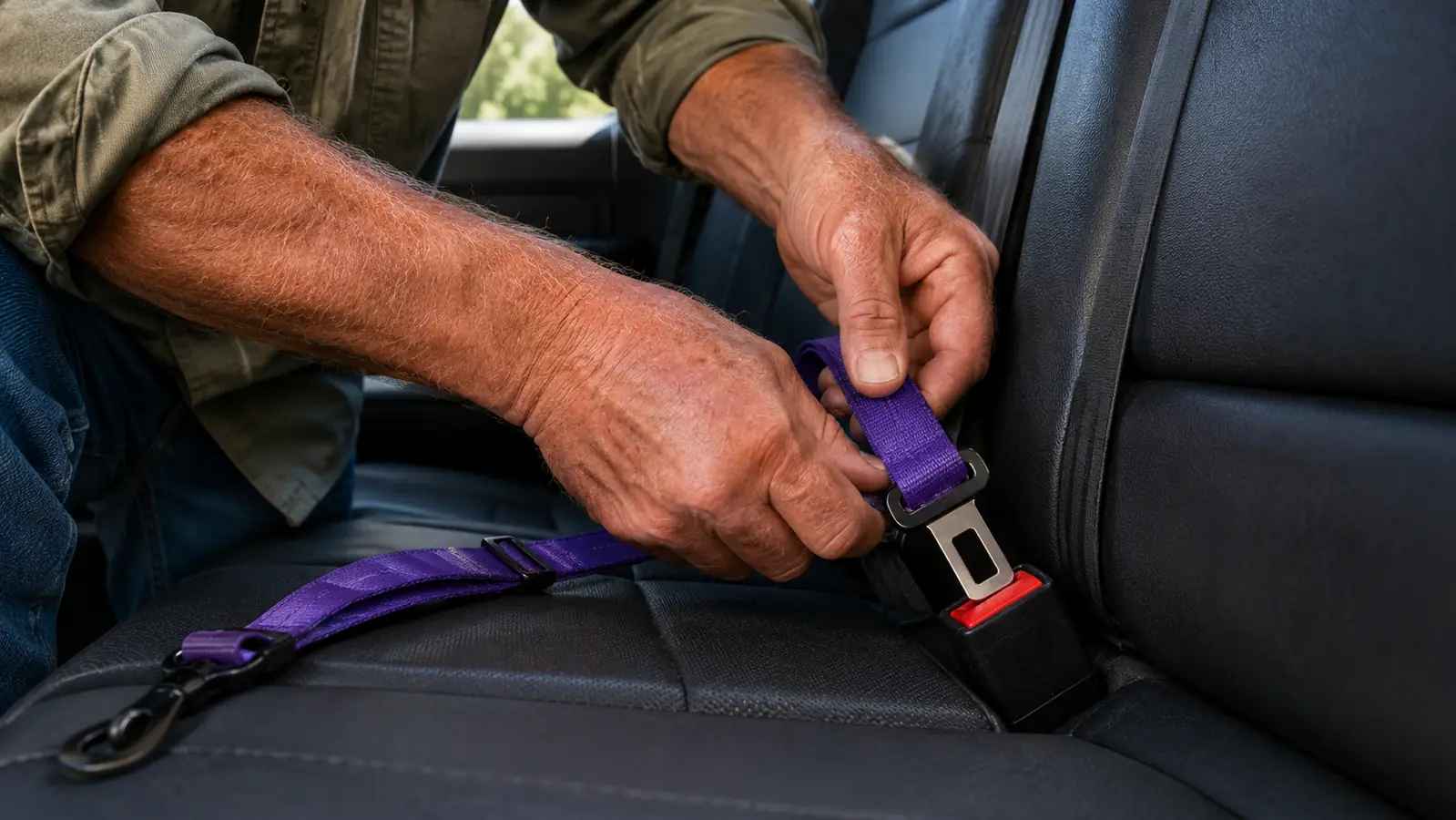
Boone rides in the back seat, clipped in with the Tru-Fit's tether routed through the factory seat belt. If you haven't used one of these, the setup works like this: the harness stays on the dog full time, the seat belt webbing passes through a loop at the back ring, and the belt retracts normally while he sits. If we stop short, the belt locks and he stays put. It's not a substitute for a seat belt in the way people assume. It's a harness that gives the factory belt something solid to grab onto.
In the past year the harness has lived through the full weirdness of truck life. Three round trips between Omaha and Salt Lake, which is a long day each way. Dozens of shorter runs to the vet, the feed store, and the river. A February stretch where it stayed below zero for two weeks and Boone wore the harness over a quilted jacket. A July week where the truck sat in the sun and the cab got hot enough to cook on. The harness has had coffee spilled on it, slobber soaked into it, and mud ground into the webbing. It's been chewed on twice by a dog who was bored and knows better.
The part that matters more to me than any marketing claim: the harness has never come loose, never unbuckled on its own, and never let Boone get a front leg through a strap. That last one is the move he pulled on two other harnesses within a week of owning them, so it's not a small point. A dog that can wriggle one leg free is a dog that's one panic away from being loose in a moving truck, and loose in a moving truck is how dogs end up hurt.
The Fit Is the Whole Game
The Tru-Fit has five adjustment points: two on the chest, two on the belly, and one across the shoulders. That's more than most harnesses bother with, and it isn't for show. On a deep-chested dog like Boone, a two-strap harness slides sideways the first time he shifts his weight. Once it's sideways, it's not doing its job in a hard stop. The five-point setup lets me pull the chest piece up into his armpits, cinch the belly strap so two fingers fit underneath, and lock the whole thing down so it doesn't rotate.
The honest part is that getting the fit right took me about twenty minutes and two tries, and the second try only worked because I had a neighbor hold Boone still. The Kurgo size chart runs small, and that's the most common complaint across the reviews for good reason. Boone is 74 pounds with a deep chest, and the size the chart suggested for his weight was too snug across the shoulders. I went up a size and it fits him properly. If you order by weight alone, you will probably end up with a harness that's too snug. Measure the chest, add a couple of inches, and go up a size whenever you're between sizes.
Once the fit is right, Boone forgets he's wearing it, and that's the real test. The padding on the chest and belly is the difference between this harness and a cheap one. Thin webbing rubs the armpits raw on a long trip in a way that makes a dog fight the harness every time he sees it. The Tru-Fit's padding is dense enough that Boone has done a full day on the road and climbed out of the truck with no marks on his skin. A harness the dog doesn't fight is a harness that actually stays on.
Crash Test Claims: What I Actually Believe
Kurgo markets the Tru-Fit as crash tested, and the company publishes the results of an independent 30 mph sled test using a 50-pound dummy. I want to be straight about what that does and doesn't mean. A 30 mph lab test is not a 70 mph interstate wreck, and no harness turns a crash into a minor event. What the test does show is that at moderate speed, the harness and tether held a dog-shaped mass in place instead of letting it become a projectile. That's a real standard, and most dog car safety products on the market can't point to anything like it.
What I can tell you from real driving is this: in the past year I've had to brake hard enough to trigger the seat belt lock maybe half a dozen times. On two of those stops Boone was standing rather than sitting, and the harness held him in the seat. He didn't hit the seatback, he didn't hit the floor, and he didn't end up in my lap. The grooved rut in the truck seat from where his hind legs brace is proof of how often he rides standing up, so the harness getting tested standing up matters more than the lab version ever could.
The caveat is that the crash protection is only as good as the tether setup. If you hook the tether to a headrest post instead of routing the seat belt through the loop, you are not getting the behavior the design intends. I read the instruction sheet, watched Kurgo's video once, and set it up right. Twenty minutes of reading beats a dog in the windshield.
What a Year of Hard Miles Did to It
At a thousand miles, the harness looked new. The webbing was still stiff, the buckles clicked clean, and the stitching was sharp. Nothing moved, nothing squeaked, nothing faded.
At ten thousand miles, the reflective stitching on the chest pad had started to fray at the edge on one side. Not enough to matter, but enough to notice. The plastic buckles still felt tight, and the steel rings showed no wear at all. I also found the first real failure: the little rubber loop on the side that's meant to hold a tag had torn at the seam and was swinging loose. It has one job and it didn't survive the year. I don't care, because nothing about the harness's job depends on it.
At eighteen thousand miles, the harness looks used, the way a good tool should. The webbing has softened, the chest padding has compressed maybe a millimeter, and the stitching is holding everywhere it matters. The buckles are still tight. The steel rings are still round. The only cosmetic damage is sun fade on the webbing, which is going to happen to any piece of gear that lives in a truck cab.
I'll say it plainly because I didn't expect it: I figured the plastic buckles would be the weak point. A year of Boone pulling against them every time a deer or a rabbit crossed the road says otherwise. They're tight, they engage cleanly, and they've never once popped loose. The part I'll watch on a longer timeline is the webbing where it rubs against the seat belt loop, because that's where the actual load goes. Mine has a slight fuzz to it at 18,000 miles, and I'll replace the harness when that looks like more than fuzz.
How It Compares to What Else Is Out There
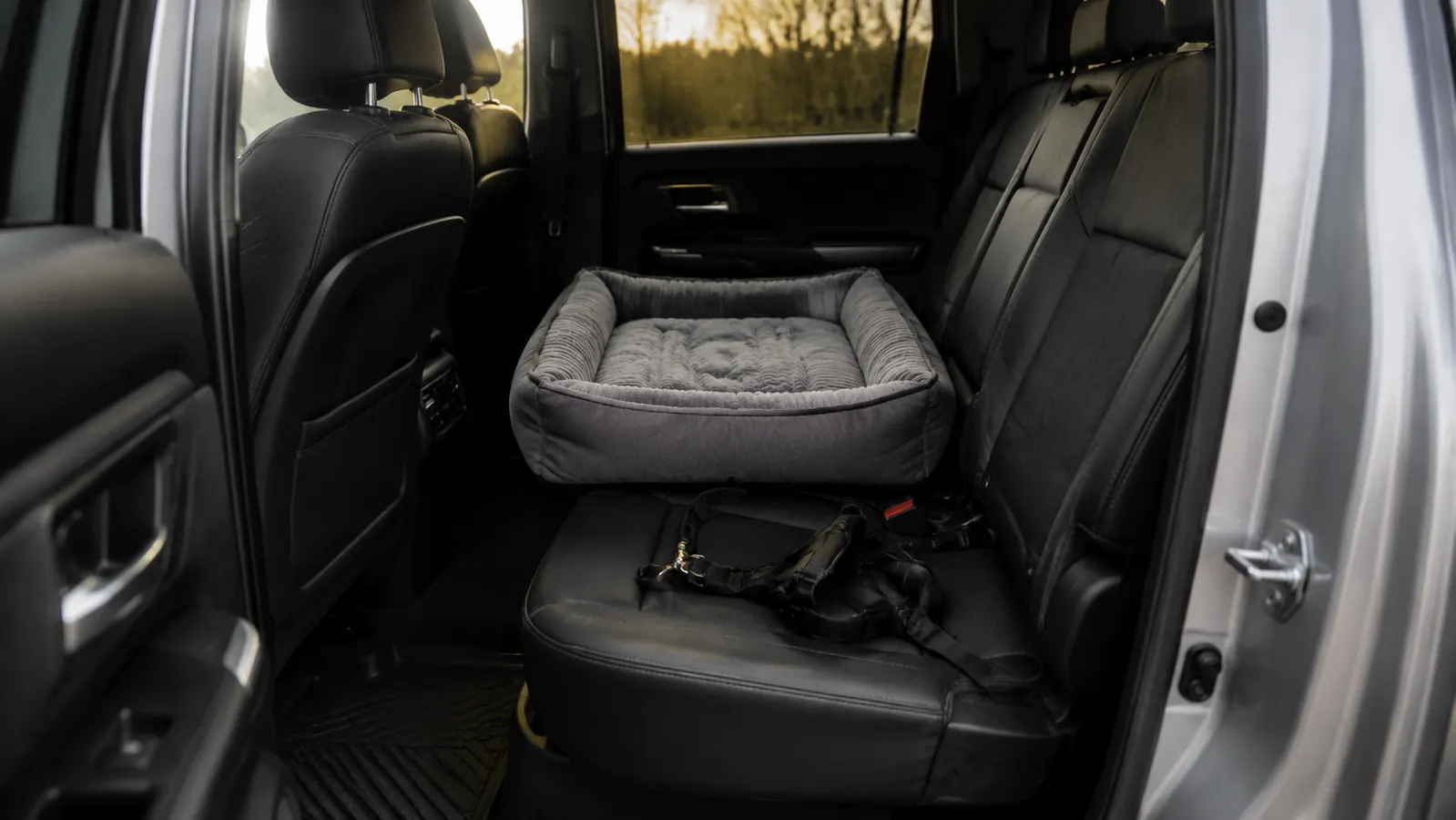
Before I settled on the Tru-Fit, I tried two other harnesses and borrowed a third from a friend. The first was a cheap step-in harness that slid sideways on Boone's chest within a week. The second had good padding but only two adjustment points, and he wriggled a front leg out at a rest stop in Wyoming. The third, a much more expensive one, fit fine but was such a production to put on that I stopped using it after a month. The Tru-Fit is the one that's still in the truck, and the reason is the balance: it's secure without being a fight to use.
The closest alternative people ask me about is a seat belt clip that plugs straight into the buckle. It's cheaper and it's better than nothing, but it holds the dog by the collar, and in a hard stop the whole body weight hits the neck. I've seen what collar pressure does to a dog mid-panic, and it isn't pretty. The harness spreads that force across the chest and shoulders, and after a year of watching Boone ride into hard stops, I can't go back to a collar clip. There's a separate comparison of car harnesses and seat belt clips on this site if you want the longer version, but the short version is that a harness is the floor for how I'll carry a dog from here on.
What I Liked
- Five adjustment points lock the harness in place, even on a deep-chested dog
- Thick padding on the chest and belly means a full day on the road with no rub marks
- Published 30 mph crash test results, which is more than most competitors offer
- Tether routes through the factory seat belt, so the belt still works normally
- Held up almost perfectly through 18,000 hard miles
Where It Falls Short
- Size chart runs small, so order by chest measurement and size up
- Plastic buckles are the obvious weak point, even though ours have held
- The tag loop tore out within a few months
- Getting the fit dialed in takes time and ideally a second pair of hands
At eighteen thousand miles, the only thing that failed on this harness is a rubber tag loop that had no job anyway.
Who This Is For
The Kurgo Tru-Fit is for anyone who drives a dog more than a few times a week and wants the dog secured in a way that actually works rather than a way that looks like it works. It's for the commuter with a bouncing dog in the back, for the weekend camper who throws gear and a dog in the truck every Friday, and for anyone whose dog has ever launched itself into the front seat at a green light. It's also for people who hate fighting with gear: once the fit is set, the Tru-Fit goes on in about forty-five seconds because the buckles are well placed and the adjustment points hold their position between wears. If you're the kind of owner who reads the instructions and checks the gear before a trip, you'll get along with this harness. If you're the kind who wants to throw it on and go, it can still work, but you're giving up some of the crash protection you paid for. The Tru-Fit rewards the twenty minutes you spend setting it up right.
Who Should Skip It
Skip the Tru-Fit if your dog is small enough that a booster seat or a simple restraint handles the job, because the harness is overkill for short trips with a twenty-pound dog. Skip it if you're expecting a harness to fix behavior: this is a restraint, not a training tool, and a dog that panics in the car will still panic, just more safely. And if you're not willing to spend twenty minutes setting the tether up the right way, you're paying for crash protection you'll never actually get, so keep your money in your pocket. Also skip it if your dog is between sizes and you refuse to size up, because a tight harness is worse than a loose one: it restricts breathing under load and can rub welts on a long drive. And skip it if you need a no-pull walking harness first and a car harness second. The Tru-Fit has a front ring for steering, so it can do double duty, but it's a travel harness at heart, and a dedicated walking harness will serve you better on the trail.
The same harness that has lived in my truck for a year
Boone and I have put 18,000 miles on the Kurgo Tru-Fit, and it's the one piece of dog gear I would buy again without a second thought. Check today's price on Amazon and see if it fits your truck and your dog.
Amazon Check Today's Price on Amazon →