
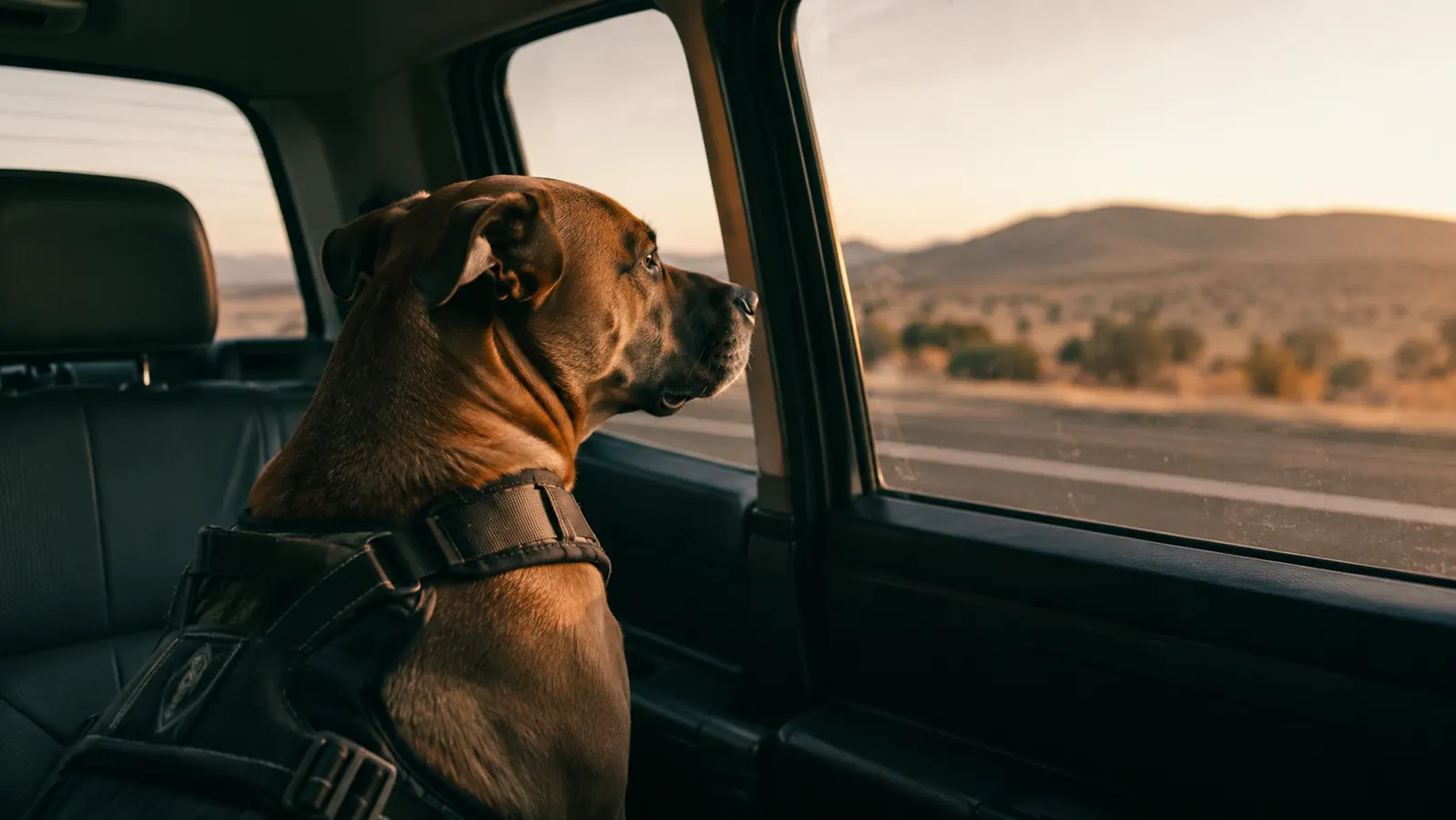
I had the moment every dog owner has eventually. You are rolling down the interstate, the dog is sprawled across the back seat, and you think about what happens if you have to stand on the brakes at 70 miles an hour. For me that moment came in a crosswind west of Cheyenne, and it sent me down a rabbit hole of crash tests, harness reviews, and product claims. The Kurgo Tru-Fit kept coming up as one of the few options with real testing behind it, so I ordered one, fitted it on Boone, and set out to prove or disprove the hype. This review is the honest version of what I found, the parts the marketing photos do not show you.
Here is what nobody tells you before you buy a crash-tested harness: the crash test is the easy part. The hard part is living with the thing. Getting it on a wiggly dog before sunrise, keeping the chest strap from sliding out of place, finding a tether length that lets him stretch without reaching the front seat. Eight months and something north of 40,000 miles later, I have strong opinions about all of it. Some line up with what the box promises. Some do not, and those are the ones worth reading about.
The Quick Verdict
A genuinely crash-tested harness that has kept Boone planted through 40,000 miles of daily use, once you accept the fiddly fit and the short tether. I trust it with my dog's life. I just wish it were easier to live with.
Amazon Check Today's Price →The harness I trusted for 40,000 miles with a 74-pound dog in the back seat
Real crash testing, a steel cable tether, and durability that has outlasted every budget harness I owned before it. Check today's price on Amazon and see real owner photos before you decide.
Amazon Check Today's Price on Amazon →How I've Used It
Boone is a nine-year-old yellow Lab mix, 74 pounds, with a greying muzzle and hips that stiffen up when the temperature drops. He rides in the back seat of my 2019 Ram 1500 crew cab, which means every piece of gear I own has to survive daily use, not just the occasional weekend trip. I run I-80 between Omaha and Salt Lake, so a short drive for us is four hours and a long one is a full day. This harness has been on Boone for most of that.
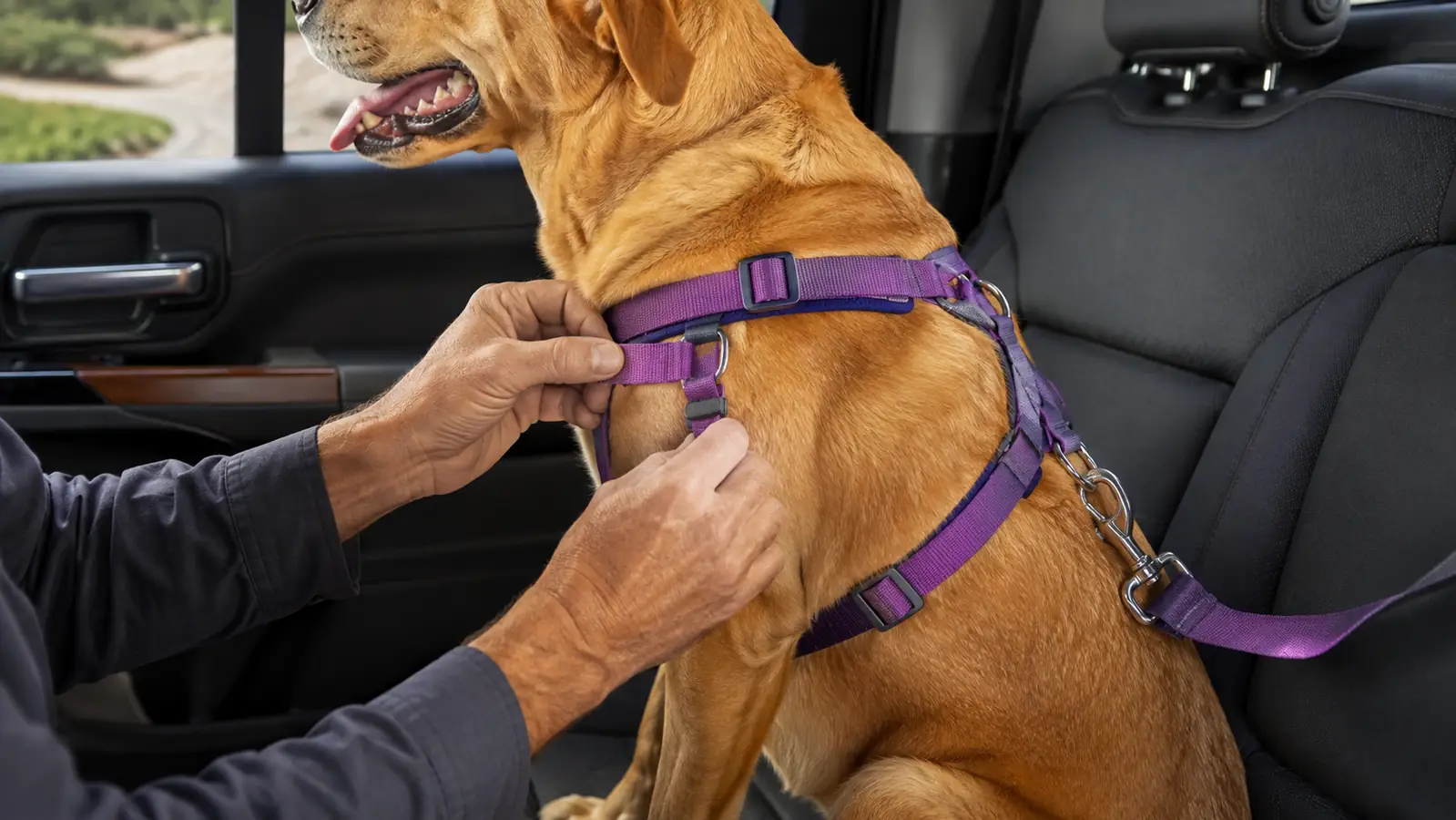
The setup is straightforward. The Tru-Fit uses a loop of webbing that clips into the seat belt latch, and the dog wears a five-point harness that clicks onto that tether. There is a padded chest plate, a belly strap, and a strap that runs between the front legs. The idea is that in a crash, the force spreads across the dog's chest and shoulders instead of concentrating on his neck, and the tether keeps him from becoming a projectile in the cab. On paper, it is exactly what you want out of a safety product.
In practice, it has done that job. I have had to brake hard twice on slick pavement, once when a deer stepped out near North Platte, and both times Boone stayed planted in his seat. He did not slide, he did not hit the seat back, the harness did not stretch or pop. That is the part no marketing photo can show you. You have to feel it from the driver's seat, and I have now felt it twice.
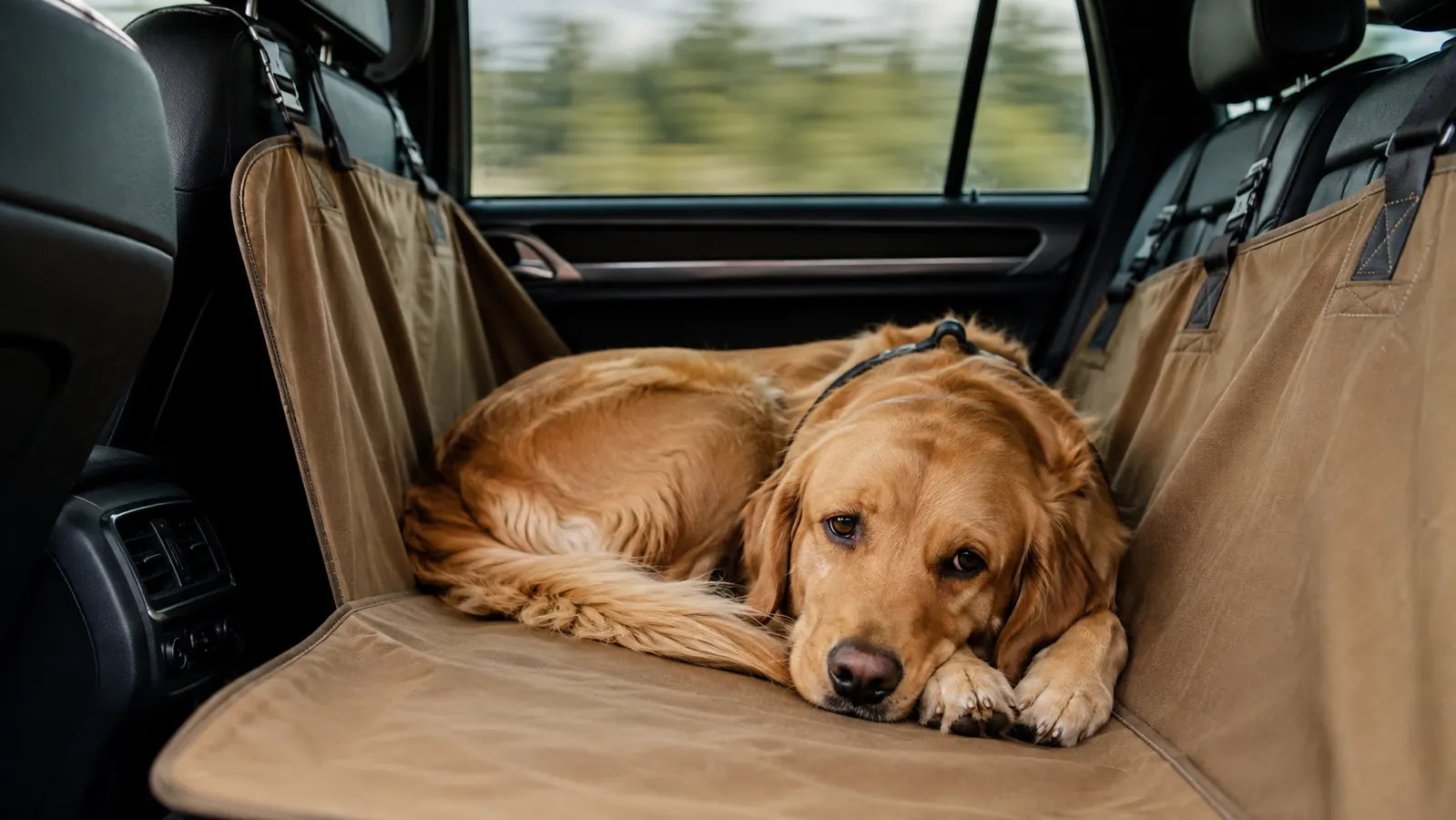
It also has to coexist with the rest of my setup. Boone sits on a waterproof seat cover because he is a wet dog from the knees down half the year, and the cover and the harness have to work together. The tether clips into the seat belt latch, which means the seat cover needs a gap or a zipper line at the latch point. Mine has one, and if you run a seat cover, it is worth checking that yours does too before you assume any harness will fit through it.
The Honest Part About Crash Testing
The Tru-Fit is one of the Kurgo harnesses that has been through actual crash testing, and that matters more than any review, including this one. But here is what the test actually covers. It simulates a moderate-speed impact using test dogs of specific sizes, and it measures whether the dog stays in the seat and whether the harness holds together. That is a narrow, specific set of conditions. It is not a promise that the harness will survive a highway-speed collision, and any product that implies otherwise should be treated with suspicion.
What the testing does give you is confidence in the hardware. The Tru-Fit anchors to the seat belt latch with a steel cable loop, not a thin strap or a flimsy clip. I have handled budget harnesses where the plastic buckles flex when you pull on them and the webbing stretches like bargain-store rope. Nothing on this harness does that. The buckles are solid, the webbing is thick, and the steel core of the tether is the kind of detail you only appreciate after you see what the cheap options use instead.
The part the test cannot tell you is whether the harness fits your particular dog. Test dummies come in a narrow range of sizes and shapes, and real dogs do not. Boone is deep-chested with a thick neck, the kind of build that makes coats, harnesses, and seat covers all fit awkwardly. Getting the Tru-Fit dialed in took real effort, and that brings me to the part I almost got wrong.
Sizing: The Thing Everybody Gets Wrong
Size the Tru-Fit by chest girth, not by weight. I cannot say that strongly enough, because the weight ranges on the package will steer you wrong. A heavy dog with a narrow chest and a lighter dog with a deep chest can need the same size, and a dog built like a barrel can need a size up from what the scale suggests. I measured Boone around the widest part of his ribcage before I ordered, and that single step saved me from a return.
The sizing still took two attempts to get comfortable. The first fit had the chest plate sitting too high, which meant the straps rubbed under his front legs when he walked to the truck. The fix was easy, loosen the chest straps, slide the plate down, tighten again, but it was not obvious from the package. The instructions show a diagram, and the diagram is fine, but the real lesson is that the harness needs a full two or three wears before you settle on the right strap position.
One more sizing note, and this is the part that will save you a headache. The straps creep. After a few hours of driving, the belly strap loosens and the chest plate shifts. I now check the fit every time we stop for fuel, the same way I check the mirror and the hitch. It takes ten seconds, and it keeps the harness doing what it is supposed to do.
The Tether Is Shorter Than You Expect
This is the honest review part. The tether on the Tru-Fit is deliberately short, and that is both the point and the annoyance. Kurgo keeps it short so the dog cannot reach the front seat or wander around the cab, and that works exactly as intended. Boone can sit, lie down, and shift his weight from side to side. He cannot stand up and walk around, and he cannot get his nose into the driver's lap while I am working a gear shift in traffic. For safety, that is the whole job.
But short means short. A dog that likes to hang his head out the window, or even rest his chin on the windowsill, has to crane into a position that looks less than comfortable. Boone has figured out he can lie with his head on the center console if he angles himself diagonally, but he ends up half on the seat belt buckle. If you have a dog that needs to pace, sprawl, or reposition constantly to settle, this tether will fight that habit, and you will have to decide whether the safety trade-off is worth it. It is for me.
I will also note that the tether itself has no padding. The dog side of the click connection is a metal hook wrapped in a short sleeve, and the sleeve has held up fine, but a dog that lunges hard will feel the tug. Boone is not a lunger, and the few times he has pulled, the harness distributed the load across his chest the way it should. A reactive dog that bolts toward another dog out the window will hit the end of the tether hard, and that jolt goes straight to the harness, which is doing its job at that exact moment.
What Wore Out After 40,000 Miles
I am hard on gear. The inside of a work truck is not a gentle place, sun through the windows, coffee spills, mud from rest areas, sand from the desert runs, road salt tracked in on wet paws every winter. After eight months of that, here is what the Tru-Fit looks like. The webbing still holds its shape. The steel buckle clicks like it did on day one. The chest pad has not flattened the way I expected, which surprised me, because the old harness I used before this one had a pad that went flat in a month.
The first real sign of wear showed up on the belly strap. The stitching along the edge has started to fray where the strap drags against the seat edge when Boone hops in and out of the truck. It is cosmetic right now, nowhere close to failing, but it is there, and it tells me the strap between the front legs takes the most abuse. I check it weekly. If it gets worse, I will replace the strap, and the reason I can say that with a straight face is that Kurgo sells replacement parts for this harness, which is more than most brands offer.
For contrast, the budget harness I bought before this one had a plastic buckle crack within two months and a strap that stretched so much the dog could walk out of it. This one has outlasted it by a wide margin and is still doing the job it is supposed to do. That is the durability story, and it is the reason I stopped looking at other harnesses halfway through this test.
What I Liked
- Real crash testing through a recognized program, not just a marketing claim
- Steel cable tether anchors into the seat belt latch, so the harness cannot pull free
- Five-point design spreads force across chest and shoulders instead of the neck
- Padding stays put and webbing has held up through daily use
- Kurgo sells replacement parts, which most harness brands do not
Where It Falls Short
- Tether is short, so the dog cannot move around or stretch much
- Fit is fiddly; sizing by weight alone will steer you wrong, measure chest girth
- Belly strap stitching started to fray after months of daily in-and-out
- Straps creep during long drives and need regular re-tightening
Two hard stops, 40,000 miles, and Boone has never once reached the front seat. That is the whole job, and the Tru-Fit does it.
Where It Falls Short
I will be straight with you. The Tru-Fit is not the easiest harness to put on a dog. It has more straps than a simple walking harness, and if your dog treats every harness like a wrestling match, the first few weeks will test your patience. Boone is a good sport about it now, but it took him a while. The learning curve is real, and anyone who tells you different is selling something.
The second thing nobody tells you is that the harness needs occasional re-tightening. The straps creep as the dog moves, especially the belly strap, so after a long drive the fit is noticeably looser than when you started. A loose crash harness is a less effective crash harness, full stop. You have to make checking the fit part of your routine, the same way you check the tire pressure. It is not a dealbreaker. It is just not the set-it-and-forget-it product the package photography suggests.
There is also the fit check ritual. The Tru-Fit asks more of you than a harness you buckle once and forget. Between the initial sizing, the strap creep, and the weekly stitching check, it is a product that wants attention. I am fine with that, because it is a safety product and safety products deserve attention. But if you want something you can ignore until it breaks, this is not it.
Who This Is For
The Tru-Fit is for anyone who drives with a dog and takes the crash risk seriously. If you commute with your dog in the car, if you road trip with him in the back seat, if you have ever braked hard with a dog loose in the cab, this is the harness I would point you to. It is also for people who are tired of replacing gear every season. Eight months of daily use and the only real wear is fraying on one strap. That is a track record I trust.
It is for drivers like me, people who spend enough time in the truck that the dog is a permanent passenger, not an occasional one. When Boone is with me, he is in the harness before the engine starts, every single time. That habit only works because the harness is comfortable and reliable enough that neither of us dreads it. That is the real test, and the Tru-Fit passes it.
Who Should Skip It
Skip the Tru-Fit if your dog needs to move around to settle. Dogs that pace, dogs that stand and lean out the window for the whole trip, dogs that get carsick and need to reposition constantly, they will fight the short tether, and the fight will make every drive worse. A harness you do not use is worth nothing, and a restless dog is the most common reason people stop using one.
Also skip it if you want a harness that disappears once it is on. The Tru-Fit is visible hardware. Multiple straps, a chest plate, buckles that you can feel through a shirt. A calm dog that rides in one spot will not mind. But if you have a sensitive dog that reacts to the feeling of straps moving across his ribs, the first few sessions might be rough. Go slow, use treats, and do not expect the first drive to be the best drive.
The harness that kept Boone in his seat through two hard stops and 40,000 miles
If you drive with a dog, this is the one I trust. Measure your dog's chest girth before you order, then check today's price on Amazon.
Amazon Check Today's Price on Amazon →