
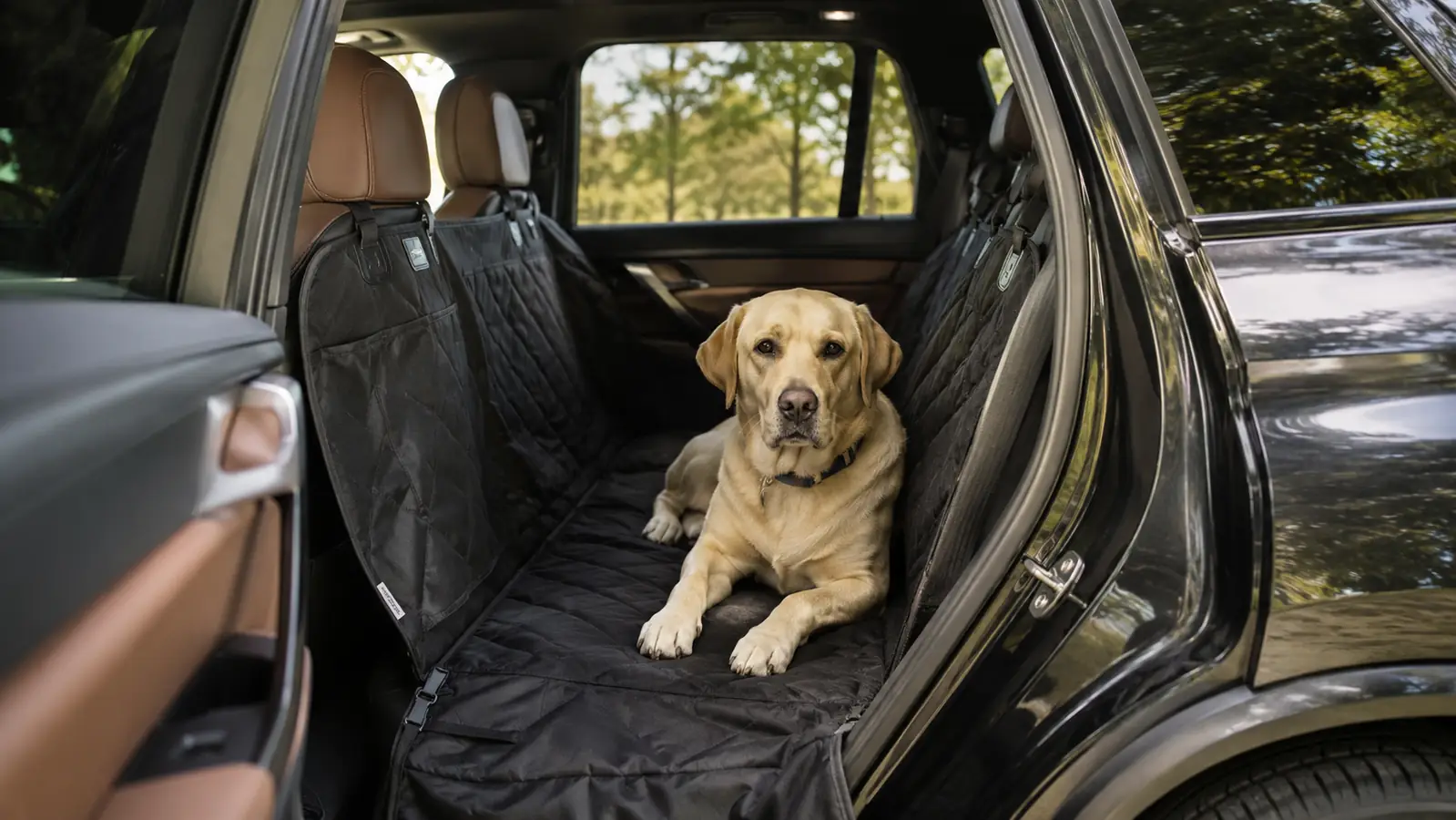
Short answer: if your dog rides with you more than a few times a month, buy the full hammock style. I drive a 2019 Ram 1500 crew cab on the I-80 run between Omaha and Salt Lake, and my nine-year-old yellow Lab mix Boone is in the back seat for most of it. I ran a plain bench-style cover for the first couple of years and switched to the URPOWER dog car seat cover after one too many wet, muddy hours with the old one. The hammock style does not just protect the seat. It protects everything around the seat too.
Here is the difference in plain terms. A bench-style cover lies flat on the seat like a fitted sheet. It keeps that one surface clean, and that is about all it does. A hammock cover anchors to the front and back headrests and spans the whole rear seat area, so it covers the seat, the backrest, the sides of the doors, and the trough at your dog's feet. For a small, dry, calm dog, the flat cover is enough. For a 74 lb dog that shakes off at every rest stop, it was not.
I am not going to tell you the hammock is perfect, because it is not. It takes longer to install, it costs a bit more, and it folds down bulkier. But after about nine months of daily use, the URPOWER hammock has held up better than the flat cover ever did, and it fixed the two problems that bothered me most: water on the cloth seat and mud on the door panels. The rest of this article goes through the specifics so you can decide which style fits how you actually drive.
The first flat cover I owned was cheap, and I learned why it was cheap. The elastic straps slipped off the headrest posts every time Boone shifted his weight, and a 74 lb dog shifting from one side to the other will pull a draped cover loose in about two seconds. I stopped and retightened it three times on one trip to Salt Lake before I gave up on the style entirely. That trip is the reason I started looking at hammocks in the first place.
| URPOWER Hammock | Standard Bench Cover | |
|---|---|---|
| Price | More fabric and hardware, moderate price | Simpler design, usually cheaper |
| Coverage | Seat, backrest, door sides, and the footwell gap | Seat and backrest only |
| Waterproofing | Waterproof backing across the whole hammock | Water-resistant top layer, open gaps at the seams |
| Installation | Anchors to four headrest posts, about 5 minutes the first time | Drapes over the seat, about 2 minutes |
| Seat belt access | Split center opens with snaps, belts stay usable | Belts sit under the cover, you reach under to buckle |
| Dog containment | Keeps the dog in the rear seat well, hard to climb over | No barrier, a determined dog can reach the footwell |
| Storage | Folds to about the size of a small sleeping bag | Folds flat, slides under the back seat |
| Best for | Wet, muddy, heavy-shedding dogs on daily drives | Small, dry, calm dogs on occasional trips |
| Rear visibility | Fabric panel across the middle sits in the mirror's line of sight | Low profile on the seat, mirror stays clear |
| Washing | Whole hammock goes in the washer, takes longer to dry | Same wash routine, dries faster and folds smaller |
| Durability | Heavy fabric and stitched straps, holding at nine months | Thinner material, elastic tends to stretch |
Where URPOWER Wins
The sides are the reason I switched. With the old bench cover, Boone would lean into the door on a curve and leave a smear of mud on the panel that dried into a stain I could not get out. The URPOWER hammock has flaps that cover the sides of the back seat and tuck around the door openings, so his paws land on fabric instead of the cloth trim. The back of the front seats get covered too. When he stands up to look out the window, he is standing on the hammock, not on your headrest.
The waterproof backing is the feature I doubted until it saved me a deep clean. One night in May, a thunderstorm rolled through just east of Ogallala and Boone came back to the truck soaked to the skin. With the flat cover, that water would have bled straight into the cloth seat and stayed there for days. The hammock caught it all in the footwell trough. I wiped the fabric down with a towel the next morning and the seat under it was completely dry. I ran my palm over the cloth before I pulled away and it was dry to the touch, which the flat cover had never been after a wet dog.
The middle split matters more than I expected. The hammock opens in the center with snaps so the seat belt buckles stay reachable. I haul freight, not passengers, but every now and then a buddy rides along into Lincoln, and buckling him in the back takes two seconds instead of digging under a cover. A flat cover hides the buckles and the belt, and a seat belt that sits under a cover might as well not be there when you need it. No restraint system works through a layer of fabric.
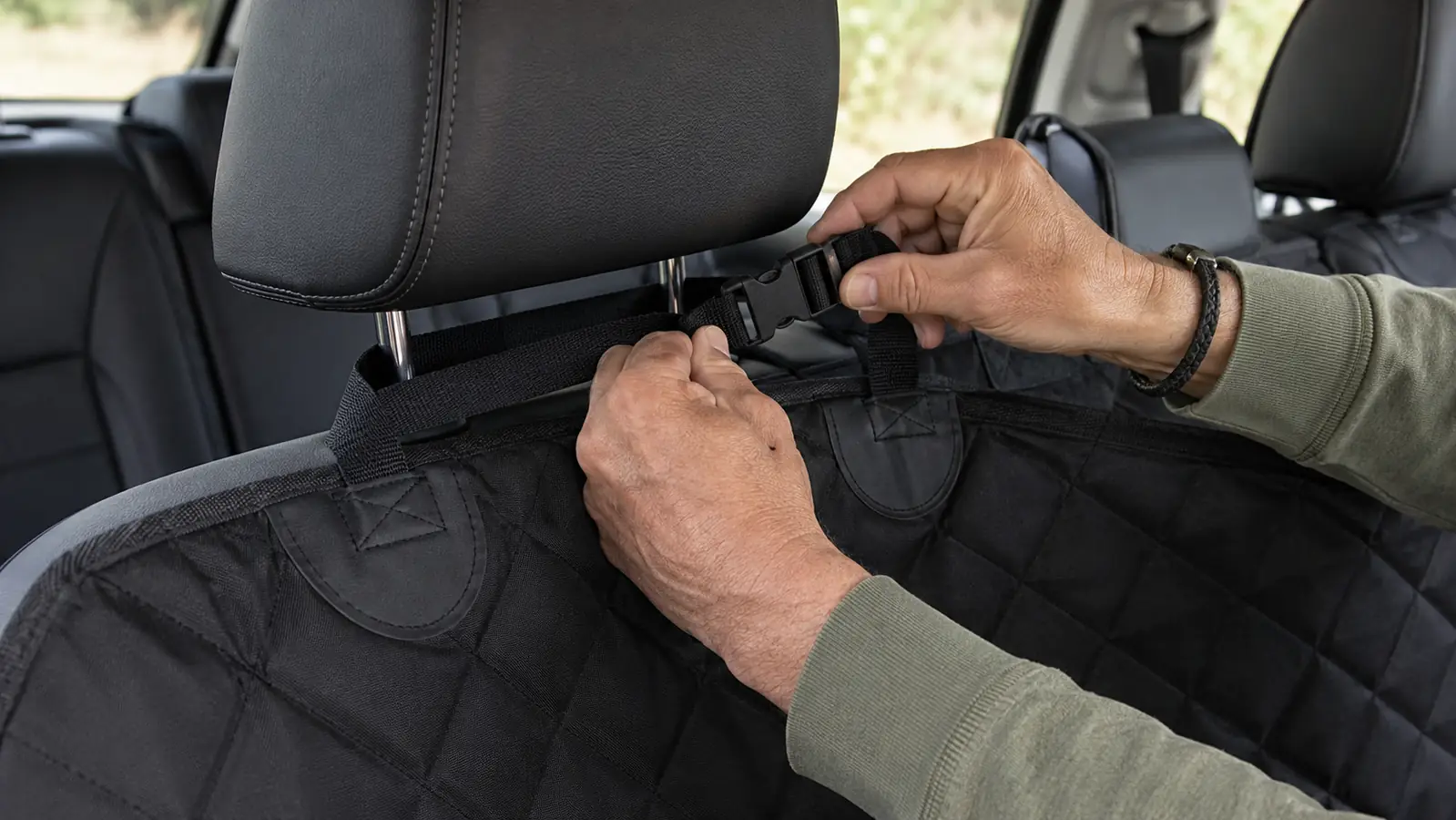
Installation is not hard, just slower the first time. The hammock hangs from the two front headrest posts and clips to the two back headrests, with the side flaps adjusted so they cover the door sills. The first time took me close to ten minutes because I routed the straps wrong. Now it is a five-minute job once the anchors are set, and I leave it in place for weeks at a time. I only pull it out to wash it, and it goes back in fast enough that I do not dread it. The straps clip to the same posts every time, so once you have the position set, the second install takes half as long.
Nine months in, the fabric still looks like it did the day it arrived. No tears, no frayed seams, and the straps have not stretched out, even with Boone climbing in and out a couple of times a day. I have washed it three times in a front-load machine and hung it over the tailgate to dry. It comes out clean every time. The cheap flat cover I used before started shedding threads by the three-month mark, which is the difference between gear and a disposable sheet.
Where a Standard Bench Cover Wins
I am not going to pretend the flat cover has no strengths, because it does. It is cheaper, and for a lot of drivers that is the whole argument. It is also faster to deal with. You drape it over the seat, clip two elastic straps to the headrest posts, and you are done in two minutes. When you need the back seat for people, it folds flat and slides under the seat. There is no way to do that with the hammock without taking the whole thing down and stowing it in the cab with you. A buddy rode along to Lincoln last month and the cover came off and folded in about three seconds, which would have been a ten-minute job with the hammock.
The flat cover also does not change how the back seat feels for a small dog. Boone is big enough that the hammock does not bother him. A 15 lb dog that likes to perch at the window might not like the sides closing in, and a dog that never drools, sheds, or gets wet simply does not need a waterproof trough under its feet. For a clean, calm, small dog that rides a few times a month, the flat cover is the honest answer and you keep the price difference in your pocket.
The other thing the flat cover does better is cleanup. You can pull the whole thing off in under a minute, shake the hair off into the grass, and drape it right back on. The hammock has more crevices where the side flaps meet the main panel, and hair collects in the corners where the straps route. It still cleans up fine, but it takes a little more pulling apart to do it properly, and more time out of your day.
The mirror is the trade I did not see coming. In my crew cab, the fabric panel across the middle of the hammock sits right in the line of sight of the rearview mirror. You can see over it, but it is there, and at night it eats some of what little light there is. The flat cover sits low on the seat and leaves the view clear. If you carry kids in the back and rely on that mirror, that counts for something.
Cold weather is the one season I can see the flat cover being the better call. In the winter, Boone wants to curl up and sleep, and the low profile of the flat cover lets him see out the side window without climbing over anything. The hammock has the sides up around him, which suits him fine, but a restless dog that likes to watch the road will feel more closed in with the hammock. If your dog gets anxious on long drives, that is worth thinking about before you buy.
The flat cover wins on price and portability. The hammock wins on coverage.
I have owned both styles, and the URPOWER hammock is the one that fixed my back seat. It covers the door sides, the front seat backs, and the footwell that the flat cover leaves exposed. Check today's price on Amazon to see if it fits your truck.
Amazon Check Today's Price on Amazon →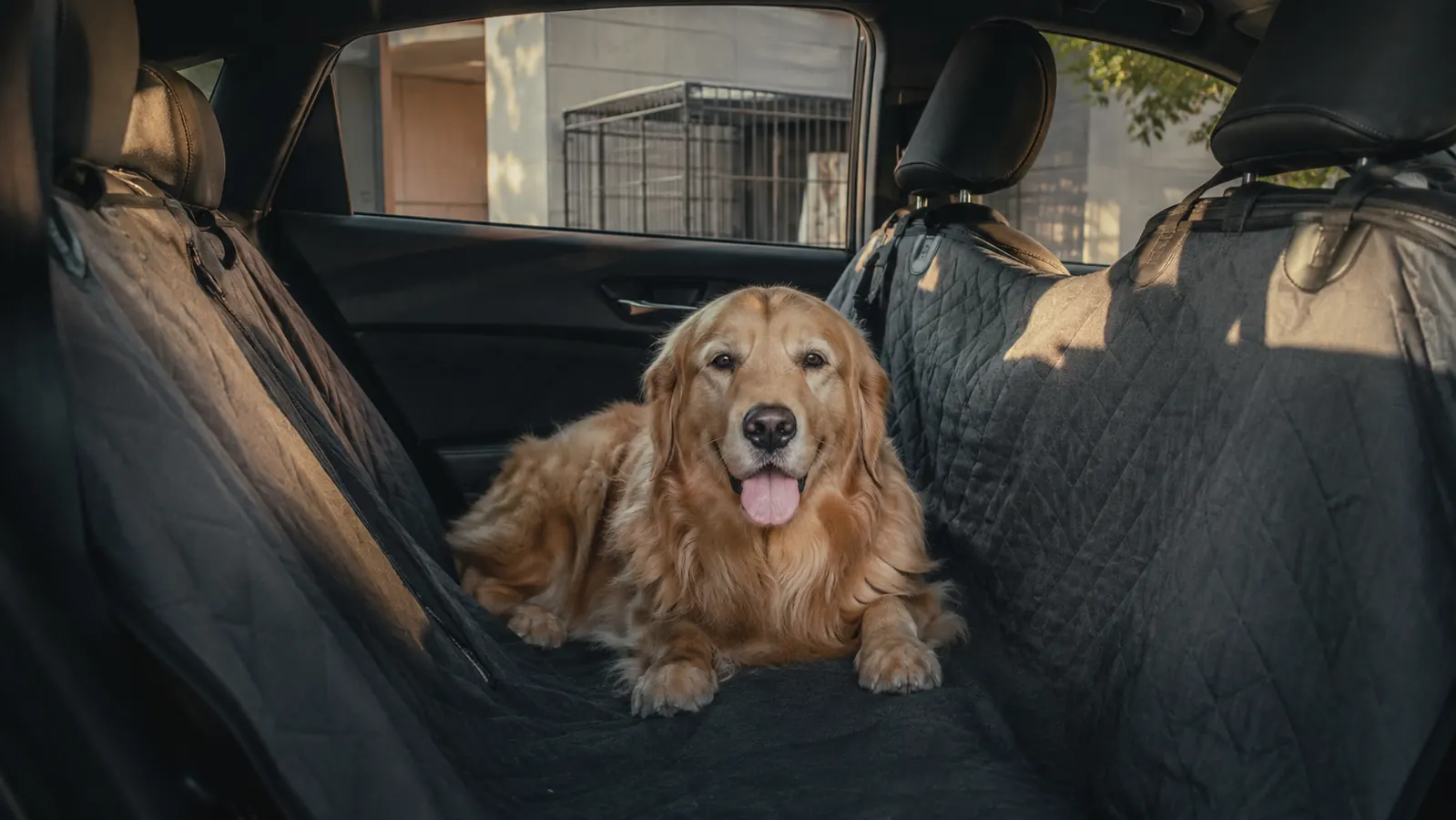
Who Should Buy Which
Buy the URPOWER hammock if your dog rides regularly, sheds, gets wet, or has ever tried to climb into the front seat while you are doing 70. It is built for the dog that lives in the truck, not the dog that visits it. The full coverage protects a cloth interior from the kind of damage that shows up at trade-in time, and the waterproof trough catches the messes you cannot plan for. If you commute with your dog every day, this is the style I would buy again.
Buy a standard bench cover if your dog is small, dry, calm, and rides a few times a month. Save the money and the installation time. A 15 lb dog that curls up in the corner does not need side flaps or a footwell trough, and a cover that folds flat is easier to live with when the back seat doubles for people and cargo. The flat cover is not a worse product. It is a product for a different dog, and buying the bigger one would just be spending money on features you never use.
If you are still on the fence, think about the one thing that annoys you most about your current setup. Is it hair on the seat cushion? A flat cover handles that. Is it mud on the door panels, water on the cloth, or the dog climbing over the center console? Then no flat cover fixes it, no matter how well made. That is the difference in a sentence: the flat cover protects the seat, and the hammock protects the whole back half of the cab.
One practical note before you order either one. Measure the back seat and check your headrest posts. My crew cab has tall posts and a wide bench, so the hammock straps wrap easily. A small SUV with low headrests may not give the straps enough to grab, and that is the kind of thing you only find out after the package arrives. The flat cover fits almost anything, which is another reason it is the safe default for occasional use.
The hammock style is the one I keep in my truck.
After nine months and thousands of miles of daily use, the URPOWER cover is still watertight, the straps still hold, and the cloth seat underneath still looks new. If your dog rides with you more than once a week, that is the style that will actually protect your back seat. Check today's price on Amazon.
Amazon Check Today's Price on Amazon →